
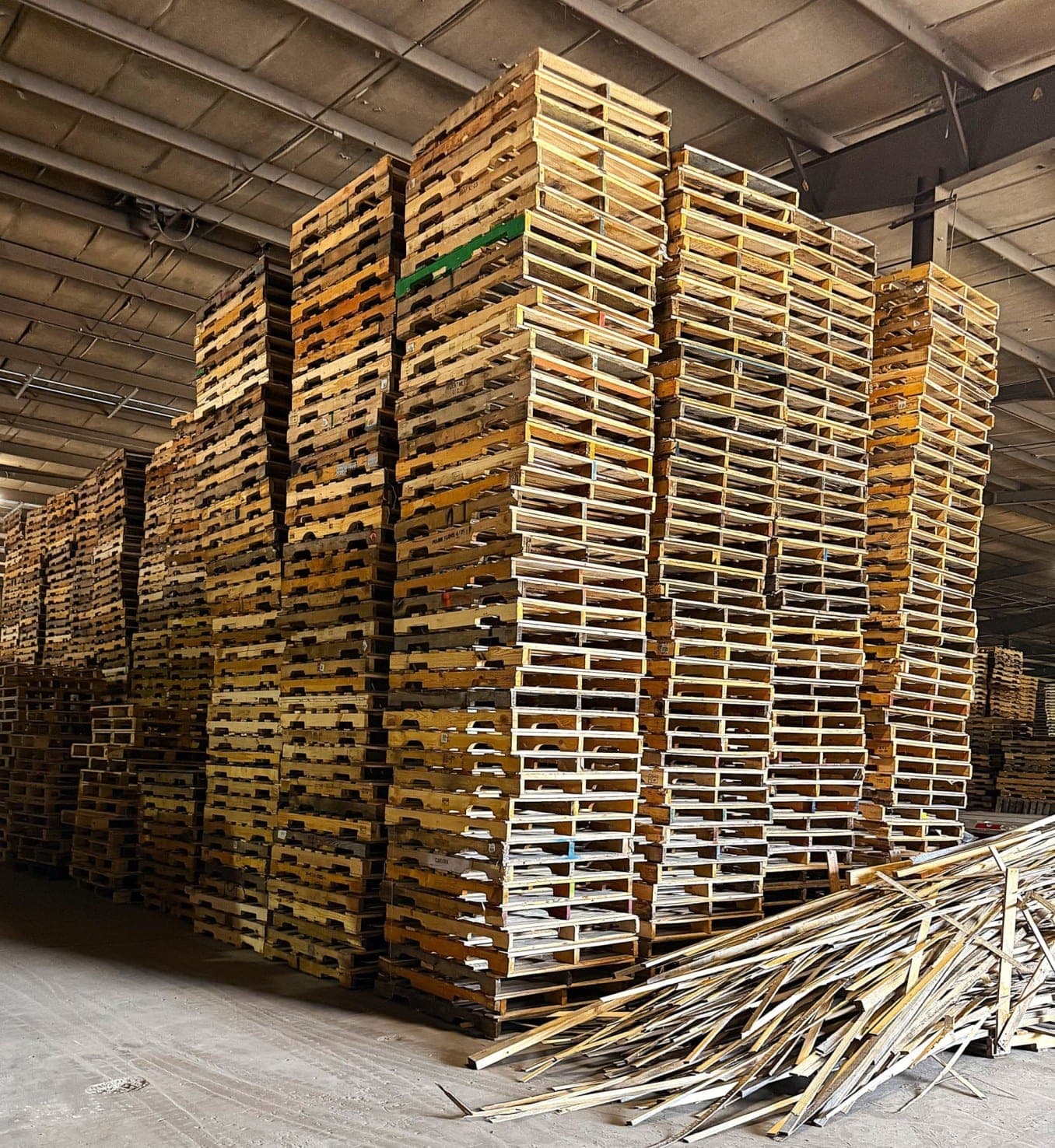
Pallet recycling is more than just a cost-saving measure—it's a crucial environmental initiative that benefits our planet and future generations. Understanding the environmental impact of pallet recycling helps businesses make informed decisions about their sustainability practices.
The Environmental Impact of Wood Pallets
Wood pallets are essential for global commerce, but their production and disposal have significant environmental consequences. Traditional pallet manufacturing requires substantial resources and contributes to deforestation.
When a serviceable pallet is discarded, the harvested and processed wood it contains leaves useful circulation early. Repair, reuse, and responsible material recovery can keep that value in service longer.
- •Material Conservation: Repair and reuse extend the working life of harvested wood
- •Landfill Space: Prevents millions of pallets from entering landfills each year
- •Carbon Footprint: Reduces CO2 emissions by avoiding new pallet production
- •Resource Efficiency: Recovering sound components can reduce demand for replacement material
- •Water Savings: Significantly reduces water consumption in wood processing
How Pallet Recycling Works
The pallet recycling process is a sophisticated system that maximizes the value of used wooden pallets while minimizing environmental impact. Understanding this process helps businesses appreciate the full scope of environmental benefits.
Collection and Sorting
Used pallets are collected from businesses and sorted by condition, size, and wood type. This initial step ensures that each pallet receives the most appropriate treatment.
- •Professional collection from business locations
- •Thorough inspection and grading process
- •Categorization by condition and specifications
- •Quality assessment for repair potential
Repair and Refurbishment
Damaged pallets undergo professional repair using sustainable practices. This extends their useful life and reduces the need for new pallet production.
- •Replacement of broken or missing boards
- •Structural reinforcement where needed
- •Condition and grade checks before the pallet returns to service
- •Heat treatment for international compliance
Recycling and Repurposing
Pallets that cannot be repaired can be separated so sound boards, fasteners, and remaining wood are directed to the most appropriate available recovery path.
- •Recover sound boards and components for safe repairs
- •Separate damaged wood from reusable pallet inventory
- •Direct residual wood to qualified downstream processors when available
- •Keep clear counts by reuse, repair, and recovery disposition
How to evaluate a pallet recovery program
Credible environmental reporting starts with records from your own operation. Track pallet movement and disposition consistently instead of relying on broad industry estimates that may not match your loads or facilities.
- •Return Rate: Count pallets returned from customers or internal locations
- •Reuse Rate: Record pallets that pass inspection and return to service
- •Repair Rate: Track pallets restored with safe, serviceable components
- •Recovery Rate: Document material sent to an identified downstream processor
- •Loss Rate: Investigate pallets that leave the system without a known disposition
- •Freight Activity: Compare collection frequency and truck utilization over time
Learn more about our pallet recycling solutions and how we maximize environmental benefits.
Business Benefits of Environmental Responsibility
A recovery program is most useful when it supports an operational goal and produces records the business can verify. Define the measures, collection process, and reporting owner before making sustainability claims.
Corporate Sustainability Goals
- •Policy Alignment: Connect pallet handling rules to the organization's documented waste goals
- •Procurement Records: Distinguish new, recycled, repaired, and recovered pallet activity
- •Facility Reporting: Use measured pallet counts instead of unverified environmental estimates
- •Supplier Review: Confirm grade, condition, treatment, and disposition terminology in writing
Customer and Stakeholder Relations
- •Customer Requirements: Share a clear recovery process when documentation is requested
- •Internal Handling: Give warehouse teams consistent rules for return, repair, and removal
- •Audit Trail: Keep the source records behind any published recovery metric
- •Accurate Communication: Report measured results without extending them beyond their scope
How Southern Pallet Recycling supports pallet recovery
Southern Pallet Recycling helps businesses evaluate surplus pallets and choose a practical reuse, repair, pickup, or recycling path based on pallet size, condition, quantity, and location.
- •Load Review: Evaluate pallet type, condition, quantity, and pickup location
- •Practical Recovery: Sort suitable pallets into reuse, repair, component recovery, or recycling paths
- •Regional Service: Coordinate available pickup and delivery options across the service area
- •Condition-Based Quotes: Explain eligibility and pricing based on the submitted load details
Build a Practical Pallet Recycling Program
A sound pallet program follows a practical hierarchy: keep safe pallets in service, repair them when appropriate, recover usable components, and document the final path for material that cannot return to use.
Need a practical pallet recovery plan?
Share the pallet size, condition, quantity, and location so Southern Pallet Recycling can review the available next steps.
Request a Review